

A joint post with Vy Nguyen of The Economics of Everyday Money.
The question
“So no, I didn’t learn about money growing up. I learned about life, in what economists call a transition economy.”
— Vy Nguyen, The Economics of Everyday Money
I asked Vy Nguyen a question I think about more the older I get: what did you learn about money growing up? Vy’s answer is below, in full.
Vy is a PhD economist who spent nine years inside finance, and writes The Economics of Everyday Money about how the economy, the money industry, and our emotions shape everyday money, for people tired of jargon, noise, and being underestimated. Every Sunday there’s a five-minute story and a “Know & Do,” something to understand and something to act on. Vy only started writing it in August, so this is a chance to find a good one early. You can follow Vy at @vyezpz.
I come at the question from a very different childhood, and from the other side of the desk.
Vy’s answer comes first, then mine. Neither of us read the other’s before writing. Read both, and tell us which one sounds like the house you grew up in.
Vy’s answer
I didn’t learn about money growing up. Not until I came to the US for college. For me, a childhood without thinking, worrying, or learning about money was the happiest part of my life.
Everything before my first younger sister was born, I know only from my parents’ stories.
My parents met in their last year of university. There were only a handful of universities in the country then, and getting in was harder than getting into Harvard. University was also my dad’s ticket out of being drafted into the war, so he studied hard to get in. He still likes to tell the story of eating one banana in the morning and then running 10 kilometers to qualify as a “national athlete.” He won a marathon. My sisters and I still see that trophy, a symbol and maybe a reminder of how hard he worked for something that didn’t earn him any means to survive in an economy that was barely working.
After they married, my parents lived in my dad’s older sister’s home, who was also supporting my elderly grandparents. When there wasn’t enough food for everyone, he drank the cooking oil my aunt had bought for the family, and got yelled at for it.
I was born into a country still recovering from war and still trying to reunify its land and its people. Cut off from the capitalist economies, the government was still figuring out how to run the country. When I was a few months old, we moved to Sai Gon, into my dad’s older brother’s house. We slept on a wooden bed a foot or two above the floodwater. My mom says she was constantly afraid I would fall in at night and drown.
Less than a year after I was born, my dad made his third attempt to escape by boat, one of hundreds of thousands of Vietnamese looking for a safe place to live and a chance to earn a living. He was arrested for the crime of leaving his country, spent a month in a labor camp, and came home still having to figure out how to survive and support us.
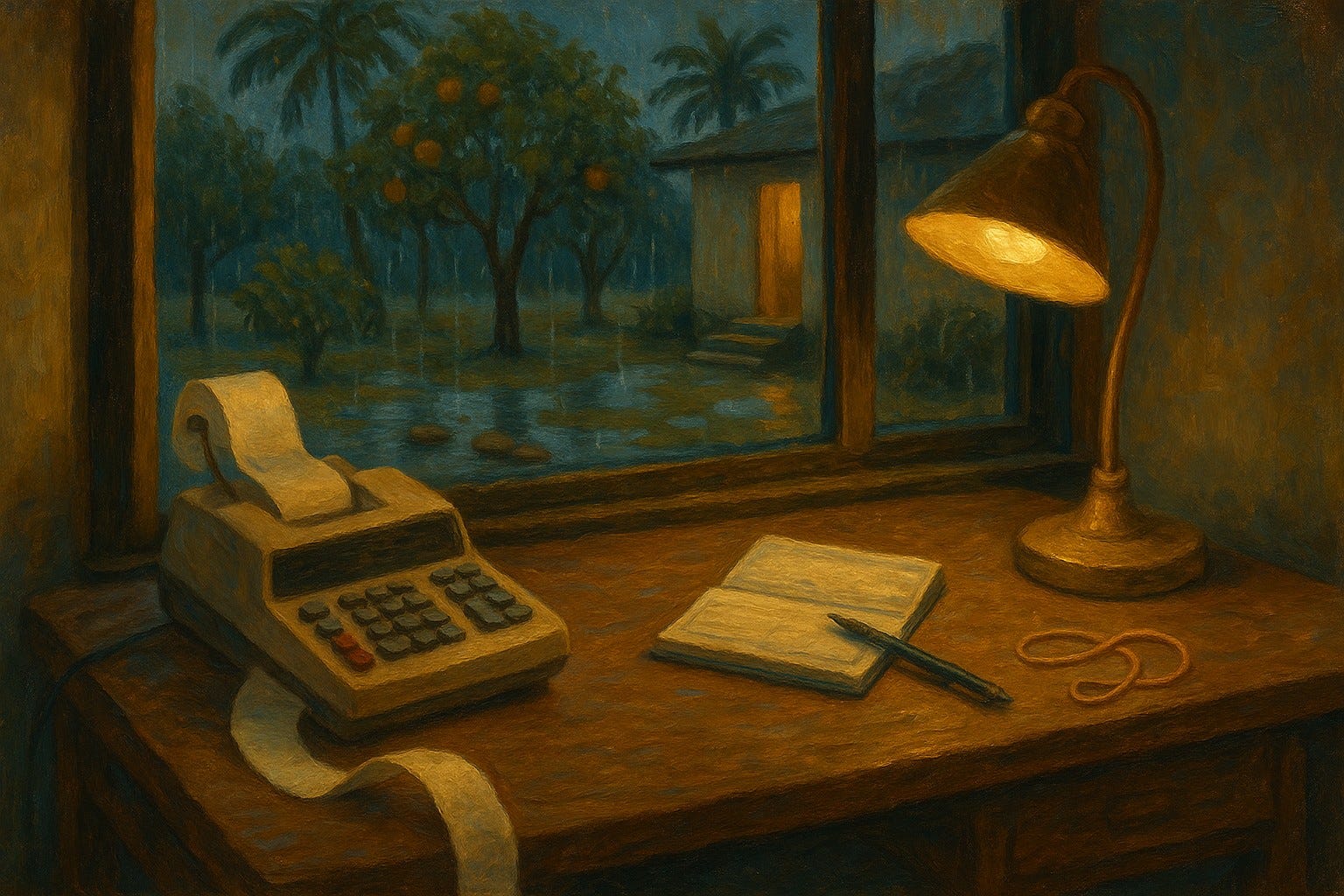
My own memories start around age 3 or 4, when my maternal grandfather used his savings to help my parents buy land to build a house in Sai Gon. My mom still remembers how hard my dad worked, hauling tons of dirt to raise the floor so the floodwater couldn’t come in. That house held the first ten years of my life, and my happiest memories are all in it. It had one open space for living and sleeping, with two wooden beds in front, a yard with four fruit trees, and a charcoal or wood fired kitchen (simply a bare concrete countertop to cook) and squat toilet flushed with a bucket of water in the back. I played in the yard while my grandma cooked. I still remember her slaughtering a chicken we had raised in that yard, climbing the trees and teaching my younger sisters to climb, and how excited I was to run out into the yard whenever the rain poured down. We had no toys and no playground, so we played with whatever was in and around the house: a handful of rocks, a dozen chopsticks and a tennis ball, a rope braided from rubber bands. The yard and the sidewalk were our playground.
In 1986, Vietnam launched a reform called Đổi Mới, or “renewal,” loosening the government’s grip on the economy and letting people buy and sell again. My mom saw an opportunity in a few yards of fabric that a government co-op couldn’t sell. She bought them in bulk and resold them, and my dad helped carry the fabric to buyers. That was the start of the business that fed our family, the one she still runs today.
I was lucky never to think about money growing up. Maybe my parents were that good at absorbing the worry. Or maybe, after everything they had lived through, money was just paper to them. Relatives who took us in, a house without floodwater, a bag of rice, a chicken: all of it was worth more than money. Did money buy us those things? Or did a functioning economy finally let my parents trade their sweat and labor for the things that kept us alive?
So no, I didn’t learn about money growing up. I learned about life, in what economists call a transition economy. Now I understand why.
Steve’s answer
I can still hear the sound. My mom would sit at her desk to pay the bills and balance the checkbook, and every time she pressed a button on that electronic calculator it made a big chunking noise as it printed onto the paper tape. Chunk. Chunk. Chunk. That desk is mine now.
When I go digging for what I learned about money as a kid, I only come up with two memories, and they’re both core memories. One was that we had enough. The other is that we had stretches when we didn’t have much, and we struggled.
Here’s something about me that might be unusual. I honestly never registered when we were tight and when we had a little extra. I never cared about having the latest or the greatest, or about what other people had. I was never jealous of anybody.
Even when we moved to Potomac, Maryland, a very affluent area, it didn’t register. I went to high school with the kids of celebrities and the kids of rich families, and I never gave it a second thought.
The one time it did land was at the house of a rich friend of a friend, when the kids there made fun of me for bringing cheap beer. That was my “what did I learn” moment. It wasn’t really about the beer. It was the first time I felt what somebody else thought about what I spent.
That’s the lesson nobody taught me, and I didn’t start to understand it until I was about to graduate high school: how peer pressure, self-esteem, and worrying about what other people might think can steer your spending for years to come.
The math was never the problem. Everything I needed to logically learn about handling money, I had by the fifth grade. Add, subtract, multiply. That part was well seasoned by then.
So would a financial literacy class have changed my thinking? I doubt it. It would have felt like one more math class, tolerable and then forgotten. Ironically, years later I wrote about how financial literacy classes don’t have the impact people hope for, and how the measured results show they aren’t the solution. But I digress. If you want the research, it’s in Why Financial Literacy Classes Fail: What the Research Actually Shows.
What I did get was a chance to watch, and maybe that was the best lesson. Not a lecture. Just the chance to observe. I watched us make deposits into savings accounts. I watched us shop with a list, never buy on impulse, and plan ahead for the things we were going to get.
All of those lessons were good ones. They still didn’t stop me from learning my own dumb money lessons once I was old enough to legally make stupid decisions.
If I had a magic wand and could go back in time, I’d ask my parents more questions about our family and how we dealt with money, credit, and debt. I’m not sure how much they would have shared. But if I had shown an interest, I think they would have happily had those conversations.
So, to answer the question directly: my parents taught me as much as I was willing to observe and process. I learned more about handling money by watching them than from any other resource, except for my own bad choices. And those bad decisions wound up teaching me a lot, because I have always believed there is no sense wasting a perfectly good mistake.
Where to go from here
Two people, one question, and neither of us read the other before writing. Vy grew up in Sai Gon, in a country still recovering from war. I grew up in Maryland. And we landed somewhere close: neither of us learned money from a lesson. Vy’s parents carried the worry so completely that money never came up. Mine let me watch, and I mostly didn’t notice it until some kids noticed my beer.
What we both got instead was a front-row seat to how our parents lived. Vy calls that learning about life. I’d call it the same thing.
So what did you learn about money growing up? Vy and I would both like to hear it. Comment, reply, or forward this to whoever taught you, whether they meant to or not. And if Vy’s half stayed with you, go subscribe to The Economics of Everyday Money. Newer writers grow one reader at a time.
Steve