

A joint post with Robin Finney of Confessions of a Bankrupt Dreamer.
The question
“Did I fail? Yes. Was I a failure? No. That distinction matters when you’re feeling like the lowest person on earth.”
— Robin Finney, Confessions of a Bankrupt Dreamer
Robin Finney and I asked ourselves the same question: what advice do you have for someone feeling like a failure and struggling for years to avoid bankruptcy? We’ve both lived it. We both filed.
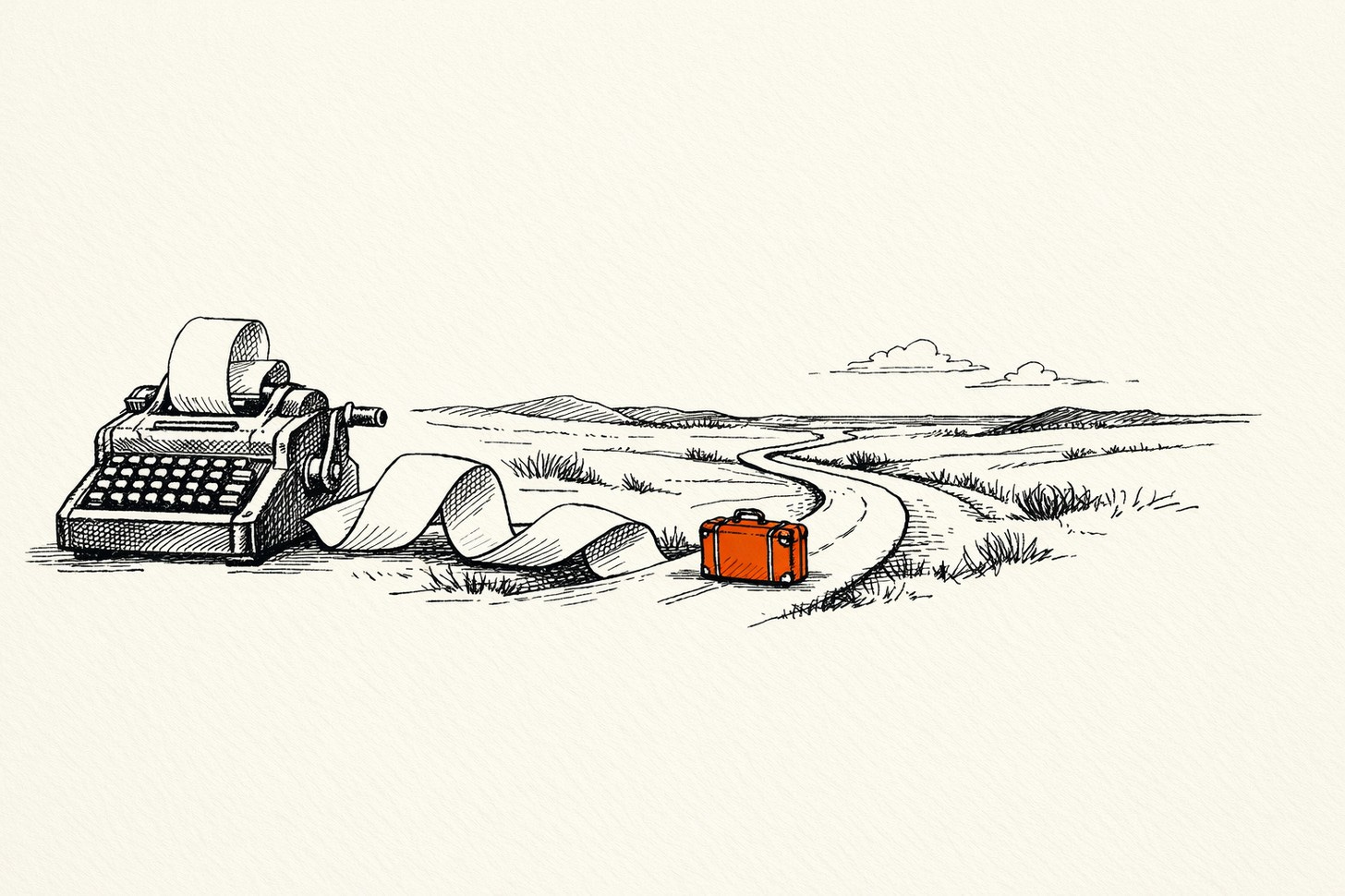
Robin writes Confessions of a Bankrupt Dreamer, “lessons and tales from a cash-poor, rich-in-experience nomad.” She’s a coach who lives out of a suitcase and travels the world, and she writes about her own bankruptcy under her own name, a topic, as she puts it, that isn’t widely talked about. She came up with the name for her publication while she was finishing her own bankruptcy, and she spent years moving through the shame before she shared it publicly. You can follow Robin at @wanderingaunt.
My bankruptcy was in 1990. Robin’s was discharged in November 2024. That’s thirty-four years apart, and you’ll see how much of it still sounds the same.
Robin’s answer comes first, then mine. Neither of us read the other’s before writing.
Robin’s answer
In 2022, my debt became uncontrollable. I had nearly maxed out every credit card I had, and the little income I was making was going straight to minimum payments, which were mostly interest at that point. I wasn’t making a dent in my debt. I felt so much shame towards myself. How could someone who was known to be responsible be in a position like this?
I was also carrying a lot of animosity towards the programs I invested in that hadn’t paid off financially in the way I believed they would. Most of all, I was embarrassed and afraid for people to know how bad my situation had gotten. I had a few close friends who knew the raw details. And I knew my energy was carrying the weight of it.
I was traveling to Vermont to support a retreat. My travels were paid for, which helped, and I had a free place to stay. When I arrived at the bus station, I started talking to a curious couple who began asking questions about my life. I mentioned that I was a nomad and had just left my sister’s house, which had been my home base for 4 years.
The woman looked at me and said, “Oh, so you’re homeless.”
It hadn’t even occurred to me that what she was saying had some truth to it. No, I did not have a house of my own. And at that point, I no longer had a home base. I was truly living the suitcase life, drifting from one place to the next, sleeping on whatever couch, blow-up mattress, or bed a friend would offer me.
I was a nomad by choice, and hearing those words struck me differently.
While talking to a close friend on the phone, I started having an anxiety attack thinking about all the bills I had due. And then she asked me the question I was afraid to ask myself. “What if you stop paying your credit cards?”
That question felt like a dagger.
How could I stop paying my credit cards? The worst scenarios ran through my mind. Collectors would start calling, someone would try to sue me, they’d confiscate what little things I had, take my passport, and then I would be stuck in the U.S. forever. Would they have actually taken my passport? No. But my fear believed the worst-case scenario.
I realized while talking to her that I was at the point of continuing to pay credit cards or eat. When your basic needs are at stake, you start to see things differently.
So I made a choice. I was going to stop paying my bills. At least for a few months until I could figure out what I was going to do. A few months turned into 15.
The collection calls began, but I wasn’t dying from it.
I spoke with a small-business lawyer whom a friend recommended. She was in a different state but took the time to listen to me and advise me. She recommended bankruptcy as an option for me. An option that I had been brushing off for 2 years. It felt like the nuclear option.
Maybe there was a safe, efficient way to move through all of this without my worst-case scenario coming true. Once I finally chose this path for myself, I felt lighter. Naming the truth of my situation and making an empowering choice that was best for me gave me a boost.
The bankruptcy process wasn’t smooth by any means. I was considered a red flag case because I had accumulated significant debt without having assets to show for it. I didn’t own a house or car, and I didn’t have investments or savings. Much of my debt came from coaching programs I’d invested in for my business, which weren’t tangible assets. The court wanted to understand where the money had gone, especially since there was nothing of significant value to sell to repay creditors.
In the end, it all worked in my favor.
When my bankruptcy was finally discharged in November 2024, I felt freedom for the first time. It was truly one of the most empowering choices I’ve made, and one I wish I had made sooner. We’re not ready until we’re ready, though.
Bankruptcy is not a light decision, and it may not be for everyone. For me, it was the decision that set me free. And not just from my debt, but from all the shame and stigma I was carrying.
I spent years believing that bankruptcy meant I was a failure. What I came to realize was that choosing bankruptcy didn’t make me a failure. Did I fail? Yes. Was I a failure? No. That distinction matters when you’re feeling like the lowest person on earth. I was finally making a choice for myself rather than continuing to live in fear of what might happen or what others might think.
If you’re in a similar position, I want you to know that your financial circumstances do not define your worth. You can make mistakes, lose everything, and still have a future filled with possibility. You may not see a way forward right now, but that doesn’t mean one doesn’t exist. Give yourself permission to explore your options, ask for help, and make the choice that’s best for you. You are so much more than your debt.
Steve’s answer
You Are Not a Failure. Your Math Is Broken.
I filed bankruptcy in 1990. Around then, when my daughter was little, we went without so we could afford amoxicillin for her ear infection. After I filed, I spent about four years carrying the shame around like a second job.
So when someone tells me they feel like a failure after years of fighting to avoid bankruptcy, I don’t hear a stranger. I hear me. Here’s what I’d tell you, and it’s what I wish someone had told me.
You are not your debt.
Debt is math wrapped in emotion. The math is usually simple. More is going out than coming in, or something happened: a job loss, a medical bill, a divorce, a business that didn’t make it. The numbers broke. Debt is what’s left over when the math is broken. It’s a symptom, not a verdict on your character.
The emotion is the hard part. In my experience, money trouble is about 90 percent emotional and 10 percent arithmetic. That’s why smart, responsible, hardworking people stay stuck for years. It isn’t because they can’t add. It’s because shame tells them that if they just tried harder, sacrificed more, picked up one more shift, they could make it work. And if they can’t, something must be wrong with them.
Nothing is wrong with you. Something is wrong with the math.
Shame is a tool, and it isn’t yours.
I learned this one from the inside. After my own bankruptcy I founded Debt Counselors of America, and for years we told people what the whole industry told people: bankruptcy is the last resort. Pay what you owe. Do the responsible thing.
I had to unlearn that. A lot of what “everybody knows” about debt was shaped by the people who profit from you believing it. “Bankruptcy ruins your life.” “Honorable people pay their debts.” “Credit counseling is the responsible middle ground.” Say something often enough and it starts to sound like a fact.
Shame and guilt keep people paying on debts long after paying stops making sense. They keep people from asking questions. They are very effective collection tools. That doesn’t make them true.
Count what avoiding bankruptcy is costing you.
People who struggle for years to avoid bankruptcy usually believe they’re protecting something. Ask yourself what. Often the years of avoidance cost more than the thing being avoided.
I’ve seen people cash out retirement accounts that would usually have been protected in bankruptcy, then file anyway. I’ve seen people borrow from family, run up new cards to pay the old ones, skip the doctor, lose sleep, lose marriages. They spent five years trying to repair the past when they could have dealt with it and spent those five years building a future.
That isn’t a moral victory. It’s an expensive way to end up in the same place.
I’m not telling you to file. I don’t know your situation, and anyone who tells you what to do without knowing your numbers is probably selling something. What I am telling you is to stop treating bankruptcy as the thing you must avoid at any price and start treating it as one option on the table. Then compare the options honestly.
Get the information, then decide.
My approach since 1994 has been simple: get all the information so you can make the decision that’s right for you. Not right for your creditors, your brother-in-law, or the internet. You.
So talk to a bankruptcy attorney. Many offer a free consultation. It’s not a commitment. It’s information. Ask what filing would actually look like for you, what you’d keep, and what it would cost. Then set that next to what you’re doing now: how many more years of payments, how much more interest, how much more of your life. Look at both with clear eyes.
You may find you don’t need to file. You may find you should have filed three years ago. Either way, you’ll be deciding from facts instead of fear.
No sense wasting a perfectly good mistake.
If you got here partly through choices you regret, fine. Join the club. I have a lifetime membership. The question isn’t whether you made mistakes. It’s whether you learn from them or just keep punishing yourself for them.
Punishment isn’t learning. Four years of shame didn’t fix anything for me. What changed things was the day I decided I was done letting it define me. I had dealt with it. It was over. I was going to look forward instead of back.
Bankruptcy wasn’t the end of anything for me. It was the start of nearly everything I’ve done since. It was a catalyst, not a failure.
Redefine what winning looks like.
Plenty of people telling you how to succeed with money measure success in ways that may not fit your life. Paying off every last dollar no matter the cost isn’t the only honorable outcome. Neither is a perfect credit score.
What is success without some peace of mind? Without sleep? Without being present for the people you love instead of lying awake doing math that won’t work?
The future you end up with might not be the one you planned. It can still be the one you need. Better days are ahead, and I say that as someone who has been at the bottom, not someone looking down at it.
If it’s gotten really dark
If feeling like a failure has turned into feeling like you can’t go on, call or text 988, the Suicide & Crisis Lifeline. Do that and talk to the attorney. You don’t have to pick one. You deserve help with the feelings and help with the numbers at the same time.
You are not a failure. You’re a person whose math broke. Math can be fixed. And you are worth more than what you owe.
Where to go from here
Two people, one question, and neither of us read the other before writing. Robin filed in this decade, while living out of a suitcase. I filed in 1990 with a little girl at home. And we both landed in the same place: you can fail without being a failure. Robin put it in eight words.
We both carried the shame for years, Robin before she filed and me after. If that’s where you are, you don’t have to carry it alone or decide anything today. Get the information, and let it be your choice.
If you’ve been there, or you’re there now, Robin and I would both like to hear from you. Comment, reply, or forward this to the person who needs to hear it. And if Robin’s half stayed with you, go subscribe to Confessions of a Bankrupt Dreamer. Newer writers grow one reader at a time.
Steve