

A little while ago I handed an AI $1,000 of my own real money and told it to trade stocks for a year, against a plain S&P 500 index fund. I wrote the whole thing down before the first trade so I couldn’t move the goalposts later. (If you missed it, that’s the pre-registration post on the site.)
Here’s the part I didn’t expect to be writing about.
A friend ran my experiment past ChatGPT, and it said something that stuck with me: don’t just compare the ending balances. Anybody can show you a number that went up. The honest question is what that number cost you to get — how far it fell along the way, how much risk it took, what the trading and the taxes quietly skimmed off.
So I did something that probably sounds strange. I asked five different AIs — not one, five — how I could accidentally lie to you about how this experiment is going. Where the traps are. How a person shows you a “win” that isn’t really a win.
Three of them, on their own, landed on the same trick. And I want you to know about it, because it’s not really about my little experiment — it’s about every “I turned $1,000 into $30,000” screenshot you’ve ever been shown.
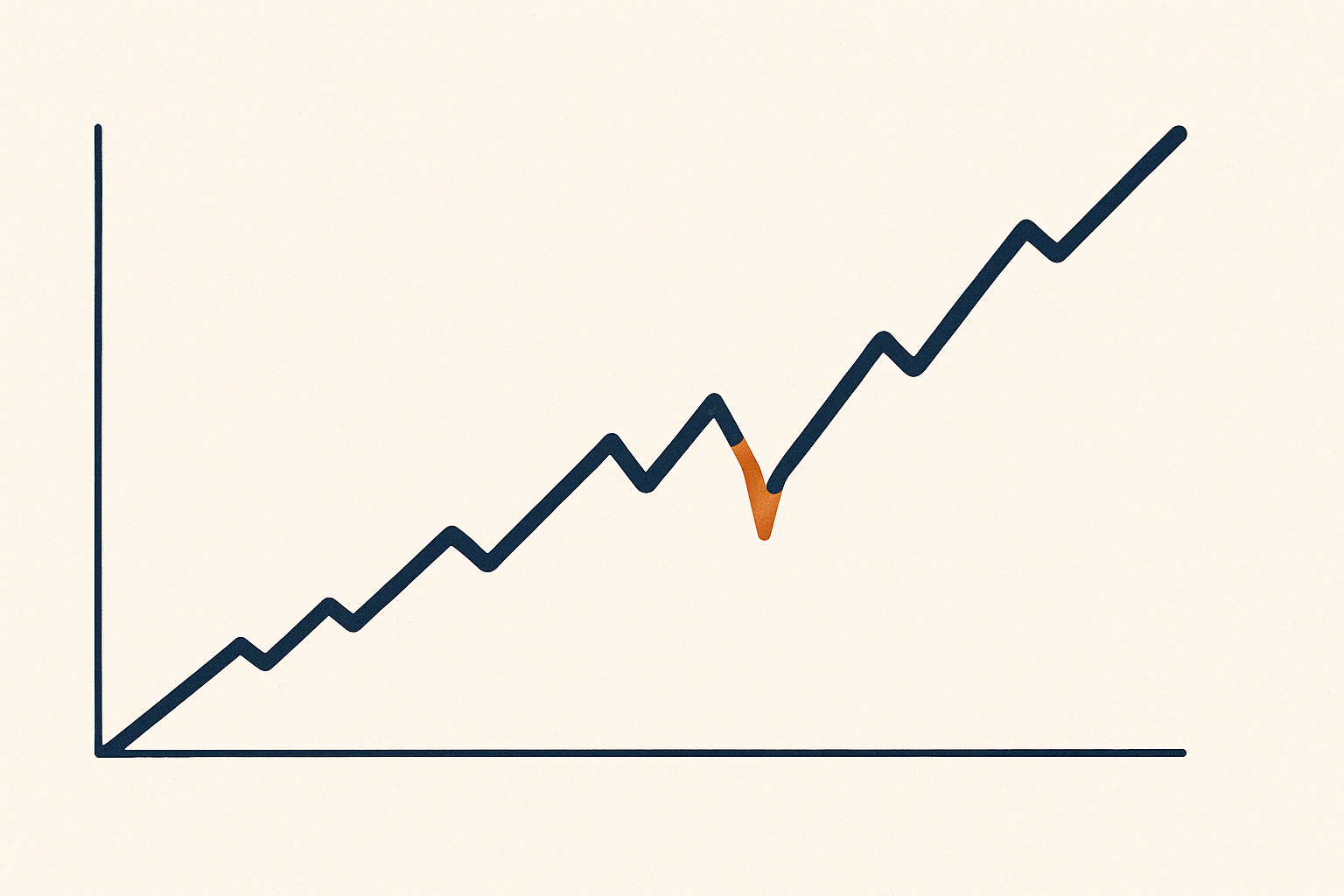
The trick is this: you can look like a genius just by sitting in cash when things get scary. If the market drops and you happened to be holding cash, you didn’t outsmart anything — you just weren’t all the way in. But the chart makes it look like skill. The index fund was fully invested the whole time and took the hit; you dodged it by accident and took the bow.
There were two more. “Commission-free” isn’t “cost-free” — there’s a quiet skim on every trade that never shows up on the receipt. And if you change the rules halfway through, you’re not testing a strategy anymore, you’re just steering toward whatever looks good. All three are the same family of thing: the result can be technically true and still completely mislead you.
I’m telling you this before I report a single result, on purpose. The whole point of doing this in public was to be honest about it — and being honest means showing you the worst day, not just the best one. So I’m building the scoreboard now to catch all three of those tricks on myself, before there are any numbers around to tempt me.
The bigger lesson is one you can use today, with zero dollars at stake: the next time somebody waves a return in front of you, ask the boring questions. What was your worst day? How much of this was you being clever versus you being lucky enough to be in cash? What did it cost you to trade? Anybody who won’t answer those isn’t showing you a result. They’re showing you a highlight reel.
Follow the experiment as it happens. I’m posting every move, every worst day, and the honest scoreboard — subscribe to the site here so you don’t miss it.
More soon — including the actual scoreboard, worst days and all.
This is my honest read, not a recommendation. You’re the one who decides what to do with your money.