

Pam and I were driving home when I noticed a man walking along a busy road. He was wearing a sweater that looked a lot like one my dad owned.
“Oh man, look at that guy,” I said to Pam. “Doesn’t look safe.”
As we got closer, I realized.
“Oh crap. That’s my dad.”
We pulled over, and I urged him to get in the car. He was pissed.
“Dad, what are you doing?”
“You left me alone and I wanted some candy, so I walked to the grocery store.”
The grocery store was across a divided highway where the speed limit was 55 miles an hour. We caught him on the way back.
He’d already crossed it twice.
As he shakily got into the car, I learned why he was so annoyed. He had lost his glasses, and people kept stopping to ask if he needed help.
“Why can’t people mind their own damn business,” he said.
There was no sense even beginning that conversation. He was hot, a little dehydrated, and in no mood after his long walk along the road.
He had wanted candy. He’d gone to get some. And a bunch of strangers had made a nuisance of themselves along the way.
Meanwhile, I was trying to keep my father alive.
My dad was the first person to graduate with a PhD in political science from Michigan State. He was brilliant, although some common sense might occasionally have come in handy. People loved him. They respected him. When they saw him, they smiled.
When I was a kid and didn’t feel well, he would sit on my bed and read me stories. He made me feel cared for and loved.
That was my dad.
After my mom died of ovarian cancer, the responsibility for making sure he was safe and cared for fell to me. My first reaction was to bring him into our house. He needed care. We would care for him.
But eventually, he couldn’t be left alone. The trip for candy made painfully clear what that could mean.
Somewhere along the way, I felt as though I had lost my dad and become his father. I was responsible for his safety, his healthcare, and needs he could no longer manage himself. The man who had raised me was changing into someone I sometimes didn’t recognize.
I can’t give you a date for that first loss. There wasn’t a single goodbye. He was still there, and I was already missing him.
I didn’t know how to do this. I learned things along the way, sometimes after getting them wrong.
“Don’t you remember?” came out of my mouth more easily than I wish it had.
Of course he didn’t remember. That was why he was asking.
I eventually retired that question from my vocabulary. There was nothing useful waiting on the other end of it for either of us.
There was one strange advantage to the repeated questions. Dementia made me look like the smartest person in the room. By the next time he asked, I already knew the answer.
You take your little victories where you can find them.
Caring for someone with dementia is a tough, emotionally draining job that fucks with your own mental health.
It was just about all I could do to manage his care, and I wasn’t doing it alone. My wife, Pam, played a giant role. Without her, I’m fairly certain there would have been days when you could have found me curled up in a corner.
“I’m just going to skip today. Thanks.”
Except his needs would still have been there that day.
If you’ve lived through this, you probably don’t need me to explain the exhaustion. You may have your own version of the candy trip. Your own phrase you wish you hadn’t said. Your own person who helped you get through the day.
I wish I had a neat answer for what caregivers need. I know they need more support than we give them. I don’t know how a support group alone is supposed to make the rest of the week manageable.
Eventually, my dad moved into assisted living.
One night, sometime after one in the morning, the facility called. He was agitated, and they couldn’t settle him. They were going to call an ambulance and send him to the hospital.
“Don’t do that,” I said. “I’ll be there in ten minutes.”
I had no idea what I was going to do when I got there. I just couldn’t see how sending this frightened, confused man to an emergency room was going to make that night better for him.
“What are you going to do?” the night staff asked.
Then I walked into his room and saw him scared and alone.
I knew.
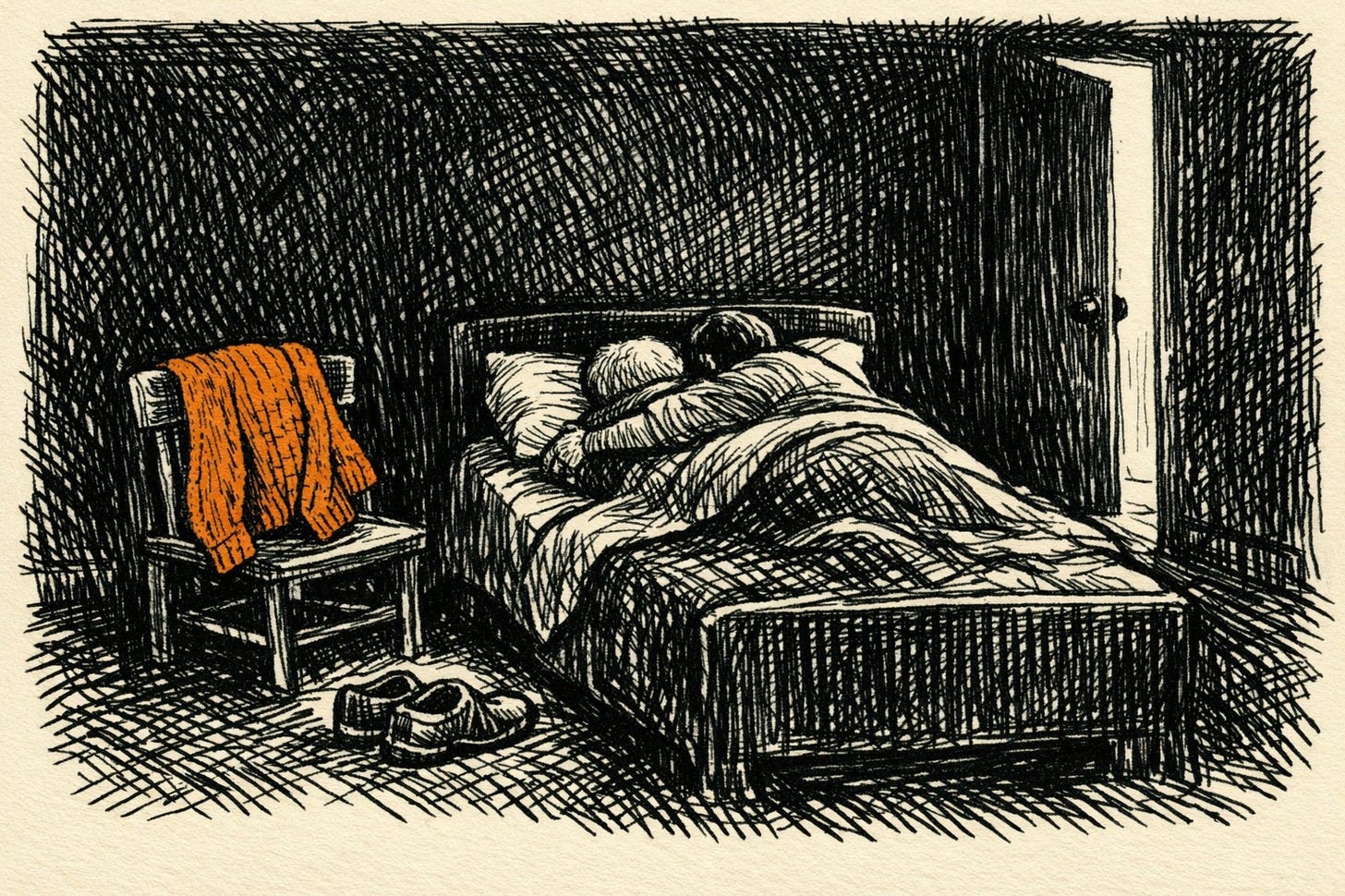
I told my dad to move over in his single bed. I took off my shoes, climbed in behind him, and wrapped my arms around him.
I told him I would tell him a story.
Eventually, dementia would take him all the way to his grave. That was the second time I lost him.
But that night, we fell asleep together in his single bed.
He was safe. He was loved. And so was I.
For one moment, everything was right in the world.
—Steve
P.S. If you’ve lived some version of this, you’re welcome to tell me about your person in the comments.
I took care my Mom with dementia for 8 years. Very hard disease to understand. It was hard to watch the deterioration
This was beautiful and sad. I remember getting the calls from rehab for my mom. Nighttime brought nightmares. I couldn’t drive, so I would spend hours with her on the phone to help reality come back. My father and I were able to bring her home for palliative care per choice. I think it was a true gift. My father is now 85, post brain cancer and treatment. He is often confused but again, I’m blessed he is still around.