

The form you sign for a parent’s care can decide whether the bill follows you home.
Dad Joke
What do you call it when Batman skips church?
Christian Bale.
The fine print
When my dad needed additional care as his dementia got worse, it was almost unimaginable trying to balance getting him the best care, my guilt as a son, finding a good facility and balancing the finances. Honestly, reading the fine print was the least of my worries.
That’s why I wanted to pass this along.
You may have seen a story going around this week about grown kids being made to pay a parent’s bills. That’s real. But it’s not the whole story.
Here’s the real part. The reporters say nearly half the states have a law on the books that can make an adult child responsible for a parent who can’t pay. In Pennsylvania, a court held a son responsible for $92,943 of his mother’s nursing home bill.
So is your mom’s bill about to become yours? For most people, no.
These cases are rare. An advocate for older adults told the reporters they run in the low double digits a year across the whole country, though he suspects more get settled quietly. And the Pennsylvania law doesn’t apply to a child who doesn’t have the money. The same story mentions a woman there who was sued for $300,000 and didn’t have to pay once her lawyers showed she couldn’t.
There’s a second way a bill like this finds a son or daughter, and it’s the one you can do something about. It’s the signature.
On the day a parent goes into a nursing home, somebody hands you a stack of forms. I know how that day goes. You sign.
Here’s the part worth knowing before that day. A nursing home that takes Medicare or Medicaid is not allowed to make a family member personally guarantee the bill to get a parent in or keep them there. That’s a federal rule. They can ask the person who handles your parent’s money to sign, and agree to pay from your parent’s money. Not from yours.
So the words next to your name matter. “Responsible party” and “guarantor” are the ones I’d ask about.
Here’s the one thing I’d do. If you’ve already signed for a parent, ask the facility for a copy of the admission agreement this week and look at what it calls you. That’s all. If you haven’t signed yet, you’ll know what to look for when the stack shows up.
And if a letter ever does come asking you to pay a parent’s bill, the lawyer in that story said to talk to an attorney right away. I’d do the same before paying a dollar. I walk through the rest in my parent died in a nursing home and they say I owe the bill.
Anyway, I wanted you to hear the whole of it before a headline had you lying awake over a bill that isn’t yours.
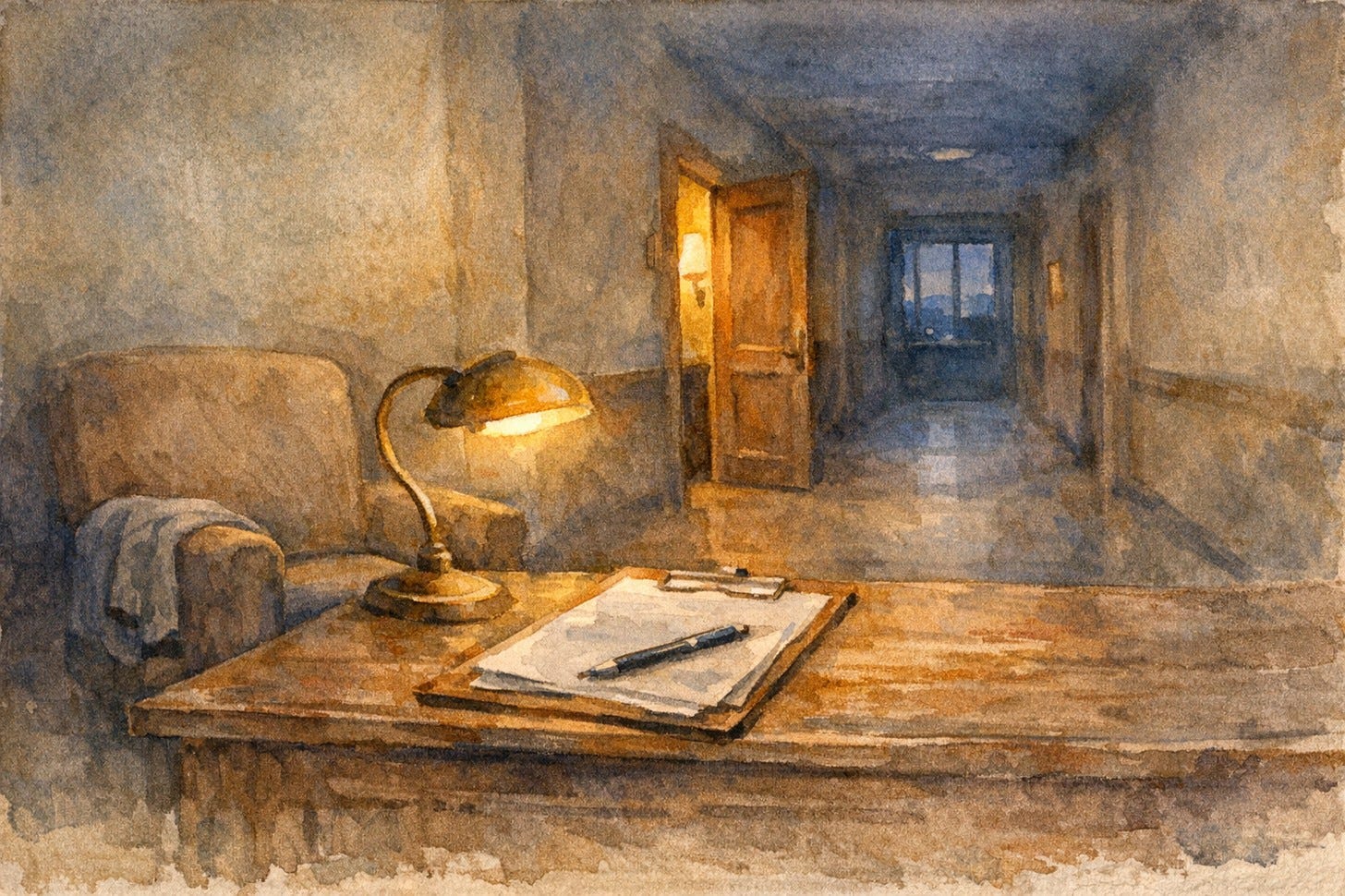
Who in your family ends up with the clipboard? Share it in the comments so we can all learn from it. I read every comment.
If you signed something in a hallway on one of the hardest days of your year, that says you showed up for somebody. The paper can be looked at again on a calmer day, and you don’t have to look at it alone. I’ll see you tomorrow.
— Steve
Also on the site since yesterday: can I pay off debt with a promissory note or a strawman account, what the $300,000 paycheck-to-paycheck survey actually asked, the FTC is sending GOAT refund payments, and how to tell if yours is real, and what the complaint against Tax Network USA says.
SEE A SCAM? SAY SOMETHING. If one has landed on you or someone you love, tell me at tips@getoutofdebt.org. The ones that can warn other people may show up here. Leave out account numbers and passwords.
If any of this was new to you, somebody you know hasn’t heard it either. It’s free at yourmoneyactually.com, and I don’t sell the list. The places I actually use for my own money, and what I get out of telling you, are on one page where they’ll always be.
This is what I’m telling friends like you over coffee. But remember, you do you.